


























































How to Do Forecasting in Power BI (Steps & Accuracy Metrics)
Remember our last guide - Power BI forecasting? It revealed things that truly blocks accuracy, both structural and situational. Now it's time to take the next step. Knowing Power...


601 & 612, The Times square Arcade, Near Baghban party plot, Thaltej - Shilaj Road, Thaltej, Ahmedabad, Gujarat - 380059
Listening is fun too.
Straighten your back and cherish with coffee - PLAY !

It's amazing to see how Data teams today are racing ahead - moving from traditional warehouses to cloud-native platforms, lakehouses, and real-time architectures. But in this rush, they overlook one key factor, i.e., how data actually moves and transforms (Data processing Approach).
This isn't just a technical aspect. It's actually the backbone of scalability and agility. Ignoring it would lead you to a costly re-architecting down the road.
But worry not! This guide will help you overcome this concern as we will be walking through the ins and outs of ELT vs ETL, their use cases, when to use what and much more.
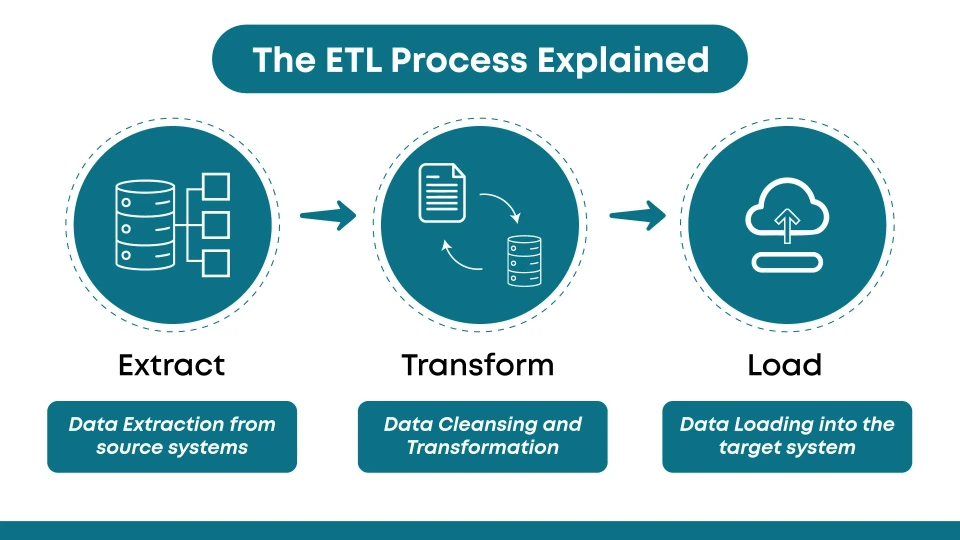
ETL (Extract, Transform, Load):
In the ETL process, the data is transformed before loading into the destination.
This made perfect sense in the on-premises era, where compute was expensive, storage was limited, and warehouses weren't built to handle raw data at scale.
Typical tools: Informatica, SSIS, Talend, IBM DataStage
Destinations: Legacy DWs, relational DBs
Ideal for:
Want to make your data super easy? Get Microsoft Fabric Consulting from iFour!
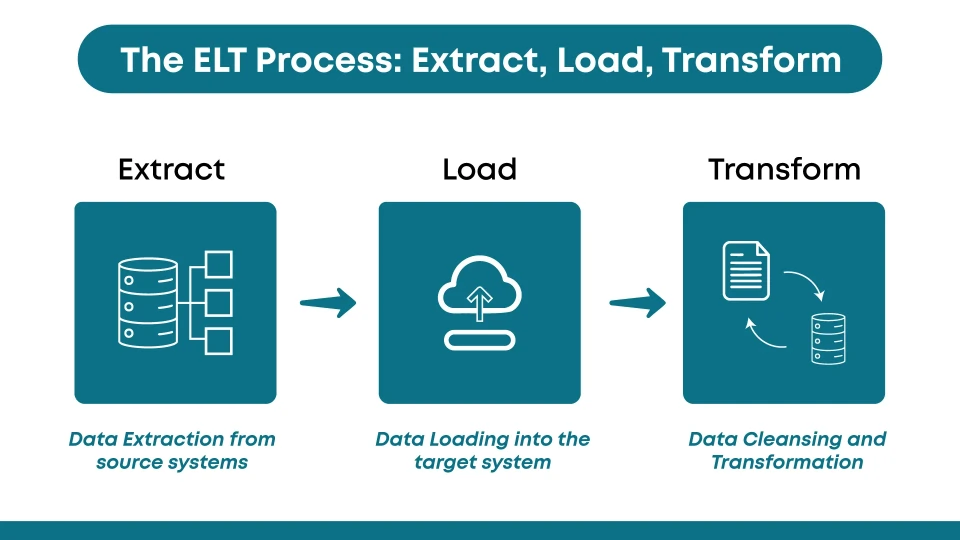
ELT - Extract, Load, Transform:
ELT flips the process by loading raw data first, then transforming it using cloud compute engines.
Why this works today:
Ideal for:
Check out this quick comparison from different aspects to see how ETL is different from the ELT process.
| Aspect | ETL | ELT |
|---|---|---|
| Transform location | ETL tool/engine | Warehouse/Lakehouse |
| Storage | Only clean/curated data | Raw + curated data |
| Latency | Scheduled, batch | Near real-time possible |
| Cost model | External ETL infrastructure | Cloud compute (pay-per-use) |
| Best for | Compliance-heavy workloads | Scale, ML, analytics, agility |
| Team fit | Traditional data engineering | Modern analytics engineering |
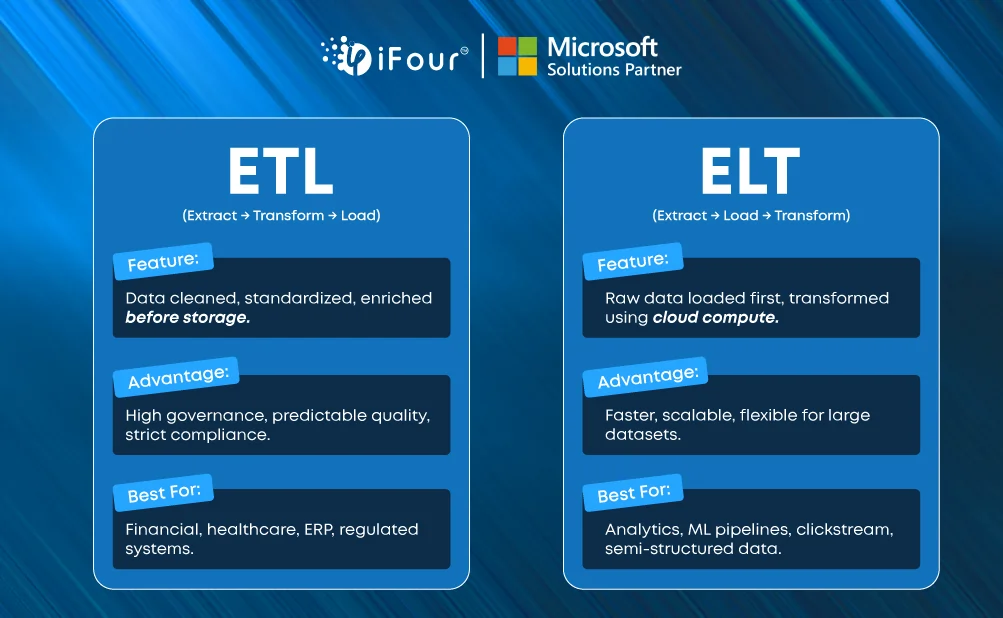
ETL is best used when:
Visualize your big data like never before with our Power BI consulting services .
Use ELT when:
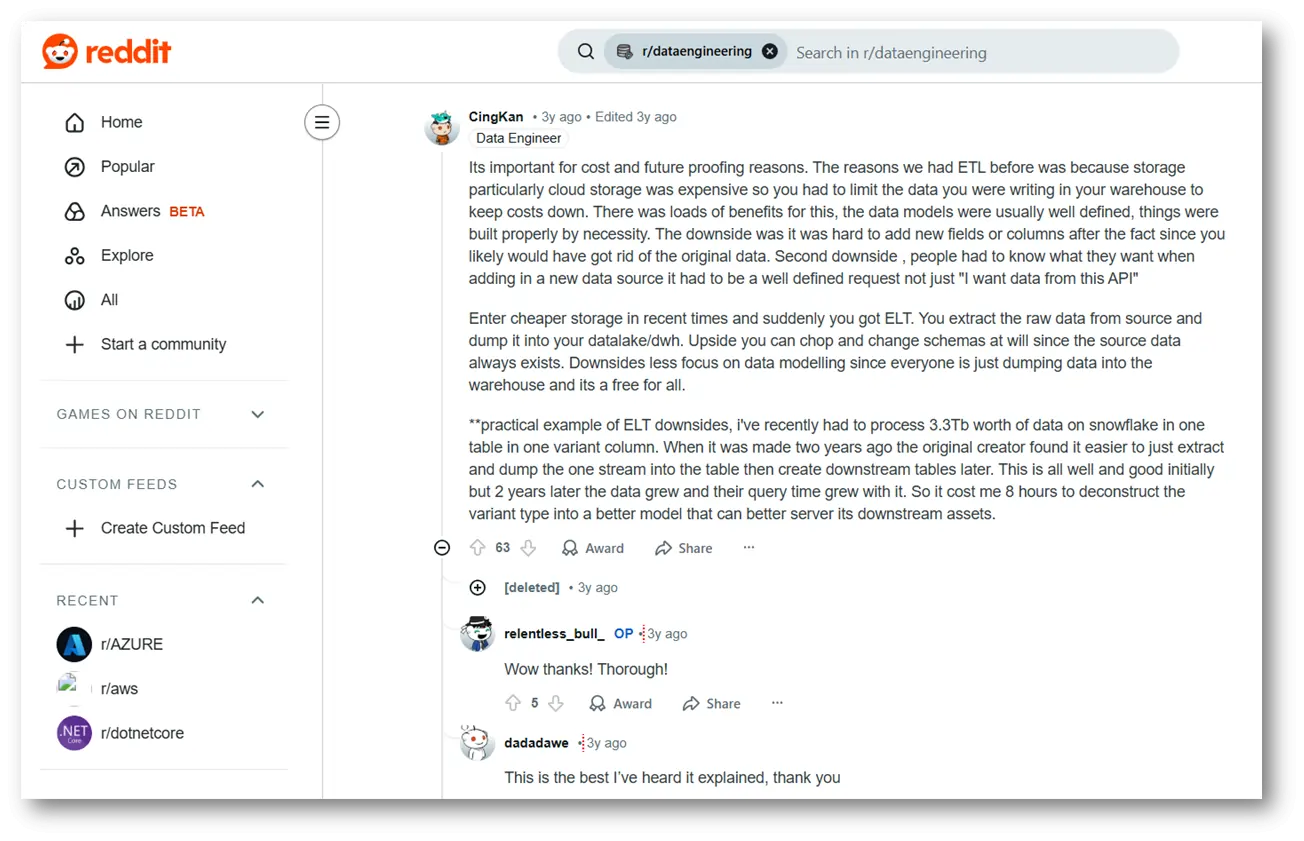
Source: ELT vs ETL: r/dataengineering
Both of these data processing methodologies have their own significance. They are better for different things. Take a look at the following advantages and limitations of ELT and ETL.
ETL (Extract -> Transform -> Load)
Pros:
Cons:
ELT (Extract -> Load -> Transform)
Pros:
Cons:
Now that you know when to use these data processing approaches, now, let's understand the technical differences between ETL and ELT. This will help you decide on the best data transformation pipeline.
i. ETL vs ELT: Data Volume & Scalability
ETL struggles when datasets exceed what the ETL engine can process within acceptable time windows.
ELT thrives at scale because it uses the elastic compute of cloud warehouses/lakehouses.
If you're dealing with:
then, ELT is your natural fit.
ii. ETL vs ELT: Latency & Freshness
ETL is typically batch-oriented (hourly, daily).
ELT supports micro-batches and near real-time ingestion.
If you require:
then, ELT or streaming-first ELT wins.
iii. ETL vs ELT: Schema Stability
ETL works best when schemas are known and stable.
ELT excels when dealing with semi-structured or evolving schemas.
Example: JSON payloads from SaaS apps -> ELT + schema-on-read is superior.
Big data? No problem! Azure Synapse Analytics makes it simple.
iv. ETL vs ELT: Compute Model & Cost Efficiency
In ETL, compute is tied to a dedicated ETL engine (often expensive, scaling is limited).
In ELT, compute is pay-as-you-go inside the warehouse/lakehouse.
If you want cost elasticity:
-> ELT is almost always more efficient.
v. ELT vs ETL: Security & Compliance
This is where ETL still excels.
If regulations prohibit storing raw PII (e.g., masked address, hashed identifiers), ETL ensures transformation happens before data lands in storage.
Compliance-driven use cases:
vi. ETL vs ELT: Analytics & ML Readiness
ELT supports experimentation and agile analytics because raw data stays accessible.
It's easier for data scientists to run ad-hoc queries or build models using raw datasets.
If you have a strong analytics engineering or ML team:
then ELT usually unlocks far more flexibility.
vii. ETL vs ELT: Operational Complexity & Engineering Maturity
ETL pipelines can become rigid and monolithic.
ELT pipelines (especially dbt-based) are more modular, testable, and CI/CD friendly.
If your team is modernizing to analytics engineering
then, ELT aligns better with software engineering best practices.
viii. ELT vs ETL - Vendor & Ecosystem Fit
Legacy tools -> ETL
Cloud-native stack -> ELT
If your platform uses:
Then, ELT is the natural choice.
Build, test, and deploy like a pro. Start with our Azure CI/CD Pipeline Deployment services .
| Requirement | Use ETL | Use ELT |
|---|---|---|
| Strict PII masking before storage | Yes | No |
| Heavy compliance / audits | Yes | No |
| Massive raw event ingestion | No | Yes |
| Storage cost sensitivity | Yes | Yes |
| Analytics/ML agility | No | Yes |
| Evolving schemas | No | Yes |
| Legacy tools/ERP | Yes | No |
| Cloud data modernization | No | Yes |
Here are the simple rules of thumb for CTOs to decide when to adopt ETL and when to adopt ELT.
1. If compliance -> flexibility -> Choose ETL.
2. If scale -> structure -> Choose ELT.
3. If your warehouse is cloud-native -> ELT almost always wins.
4. If PII must be cleansed before storage -> ETL is mandatory.
5. If your team uses dbt, Spark, or Databricks -> ELT is the natural path.
According to expert discussions on Stack Overflow and industry best practices, a hybrid ETL + ELT approach can work - but only in specific scenarios.
As per the facts, many Experts caution that mixing both approaches can increase complexity in orchestration and testing.
So, a hybrid approach should be picked only when you have clear boundaries for what happens pre-load vs post-load - otherwise, stick to one strategy for simplicity and maintainability.
Experts on Reddit and data engineering forums believe performance depends on context.
ETL performs better when:
ELT outshines ETL when:
CTO & Director at iFour Technolab
So, this has been a major question often heard - "Load first? or Transform first?" Honestly, neither ETL nor ELT is universally better - it really depends on the use case.
ELT shines for large, cloud-based datasets where speed and flexibility matter, like machine learning. ETL is best for smaller, structured data that needs strict compliance and transformations before loading.
Want to simplify your data processing speed? Start with our Azure DB migration services. Zero disruption guaranteed!
“Honestly, ELT will not entirely replace ETL. They're just good at different things. ELT works best for modern cloud setups and huge, messy datasets because it uses cloud power for transformations.
ETL still matters when you need strict structure and governance before loading—like in finance or healthcare. Most companies? They mix both, depending on what the data needs.
So, it's not competition - it's about picking the right tool for the job.”
To conclude, ETL transforms data before loading it into a destination. ELT loads raw data first and transforms it later using cloud computing.
ETL and ELT are not rivals - they are two strategic approaches designed for different needs. The right choice depends on several key factors, for example, your data governance needs, scalability requirements, compliance constraints, analytics maturity, cloud modernization roadmap, etc.
Looking to modernize your data? Partner with iFour, a certified Modern Work Microsoft Solutions Partner and expert in AI and Azure Cloud services.
ETL transforms data before loading. ELT loads raw data first and transforms it using cloud compute.
No. ELT is better for scale and analytics. ETL is better for compliance and predictable, structured transformations.
Yes. Hybrid patterns are common: ETL for sensitive systems, ELT for analytics and ML.
When your regulations require transforming or masking data before storage.
ETL -> Informatica, Talend, SSIS
ELT -> dbt, Spark, Snowflake, BigQuery, Databricks
Streaming-first architectures usually lean toward ELT-like patterns with real-time enrichment.

A passionate Technical writer and an SEO freak working as a Content Development Manager at iFour Technolab, USA. With extensive experience in IT, Services, and Product sectors, I relish writing about technology and love sharing exceptional insights on various platforms. I believe in constant learning and am passionate about being better every day.


Recent Posts

How to Do Forecasting in Power BI (Steps & Accuracy Metrics)
December 02, 2025
ETL vs ELT: Key Differences, Benefits & Use Cases Explained
November 26, 2025

Modernizing applications with the 7 R strategy – A CTO’s Guide
October 16, 2025

Top Shift Left security Best Practices CTOs should consider
October 10, 2025

Real-world Consequences of Ignoring DevSecOps In Your Strategy
September 29, 2025
Categories
Remember our last guide - Power BI forecasting? It revealed things that truly blocks accuracy, both structural and situational. Now it's time to take the next step. Knowing Power...
It's amazing to see how Data teams today are racing ahead - moving from traditional warehouses to cloud-native platforms, lakehouses, and real-time architectures. But in this rush,...
Think about the last time CTOs spent most of their time fixing old systems. Updates were slow, servers were expensive, and adding new features took time. Now, things have changed....

Get this Demo!
Get this Demo!
Get this Demo!
Get this Demo!
Get this Demo!
Get this Demo!